
09 Aug 2026 · Repair & Equipment
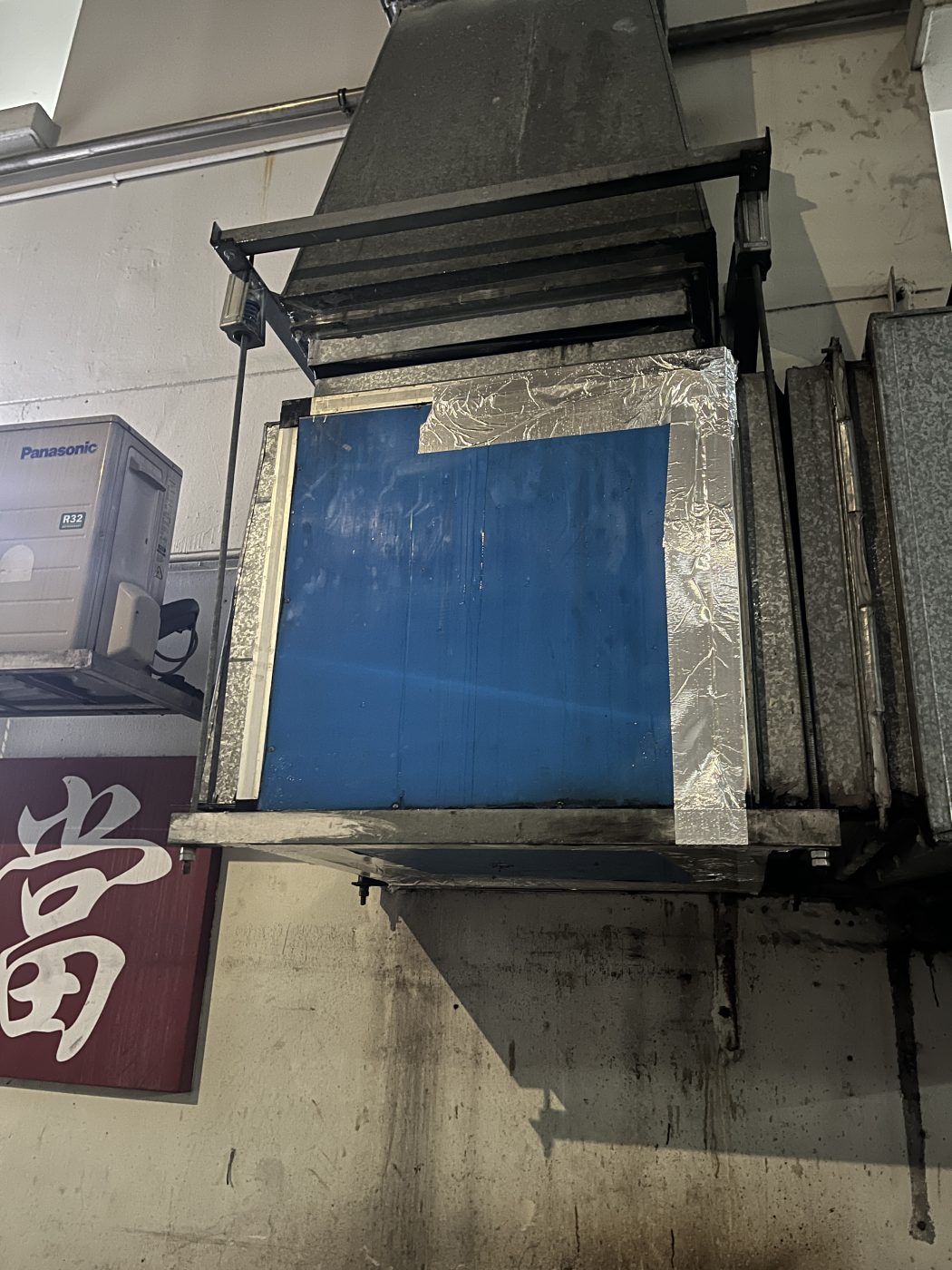
When a commercial kitchen exhaust fan stops working, first check the isolator switch and circuit breaker, then inspect for grease build-up on the fan wheel. If the motor is seized or the belt is snapped, shut down cooking operations and call a ventilation specialist immediately — running a kitchen without extraction is a fire and health risk.
If your commercial kitchen exhaust fan is not working, this guide covers the most common causes — from power and control-panel faults to a failed motor — and the order worth checking them in. It also covers when the safe call is to stop and get a specialist on site, because a kitchen without extraction can't keep cooking safely. We've attended enough emergency callouts to know that a failed fan almost always comes with a domino effect — staff sweltering, orders backing up, and a very stressed kitchen manager on the phone. Here's what to do, step by step, until the problem is fixed.
Before you call anyone, run through these quick checks. They take less than five minutes and sometimes save you a service call entirely.
It sounds obvious, but we've rolled out to jobs where a tripped breaker or an accidentally knocked isolator switch was the whole story. Locate the electrical isolator for the fan — usually mounted near the fan or at the main distribution board — and confirm it hasn't tripped or been switched off. If the breaker keeps tripping when you reset it, do not keep resetting it. A breaker that trips repeatedly is telling you there's a fault downstream. Leave it off and call us.
Many commercial systems run through a control panel or a variable speed drive (VSD). We supply and install our own control panels and VSDs, and one thing we see regularly is a VSD that has faulted out and locked itself — often showing a fault code on its display. Check for any error codes or warning lights. If you have a manual on site, look up the code. If you don't, photograph the display and send it to your service provider. Don't attempt to reset a VSD repeatedly without understanding why it faulted.
If power is confirmed but the fan isn't moving, go to the fan. Is the shaft turning at all? Is there a burning smell? A seized motor or a snapped drive belt will be obvious once you're standing in front of it. Do not try to manually spin a fan that is powered on. Isolate power first, then check. A fan wheel caked in hardened grease can become so heavy it stalls the motor on start-up — we've seen wheels carrying kilograms of built-up grease that have sheared the motor shaft over time.
In our experience servicing kitchens across Singapore, the causes fall into a predictable pattern.
This is the single most common cause we encounter. Grease accumulates on the fan blades over months of operation, adding weight and throwing the wheel out of balance. An unbalanced fan vibrates, which stresses the bearings and motor. Eventually, either the motor overloads and trips, or the bearings fail entirely. This is entirely preventable with regular cleaning — which is exactly why NEA requires scheduled maintenance of exhaust systems. If your fan wheel is clogged, it needs to be removed, degreased properly, and reinstated. We use our own BC Air chemical series for this — formulated specifically for baked-on kitchen grease.
Motors wear out, especially when they've been running hot due to restricted airflow or sustained overloading. We stock a range of replacement electric motors for MV fans and can usually turn around a motor swap within the same day for common frame sizes. If we have to source a non-standard motor, we'll give you a clear lead time upfront — no surprises.
Bearings give plenty of warning before they fail: a growling or screeching noise during operation is the tell. If your team has been hearing an unusual noise from the fan for weeks and no one acted on it, a bearing failure is a likely outcome. Bearing replacement is straightforward if caught early. Left too long, it can damage the shaft or the motor itself, turning a minor kitchen exhaust fan repair into a major one.
Belt-driven fans are still common in older systems. Belts degrade, crack, and eventually snap — often at the worst possible time. We carry common belt sizes in stock, and a belt swap is typically one of the quicker repairs we do. That said, if the belt snapped because the pulleys are misaligned or the motor mount has shifted, we'll address the root cause at the same time rather than just fitting a new belt and leaving.
Loose connections, corroded terminals, or a faulty contactor in the control panel can all prevent a fan from starting even when the motor itself is fine. Our engineers are comfortable working across the mechanical and electrical sides of a system — we don't need to call a separate electrician to trace a wiring fault.
Honestly? No. We understand the commercial pressure to keep the kitchen running, but operating a commercial kitchen without functional exhaust extraction creates real risks:
If extraction is completely lost, reduce or suspend cooking operations, ventilate the space as best you can by opening doors and windows, and get a specialist on site as quickly as possible. We run 24/7 standby for exactly this situation.
When our engineers reach your site, the first thing we do is a proper diagnosis — not just a quick look and a guess. We'll check electrical supply, inspect the motor and bearings, assess the fan wheel condition, and review the control panel. We'll tell you what's wrong, what it takes to fix it, and whether any parts need to be sourced. Because we fabricate and stock our own components — motors, fan parts, control panels, VSDs — we can often carry out repairs in a single visit rather than leaving you waiting on an order.
We'll also flag if the breakdown has been caused or worsened by inadequate maintenance. If the fan wheel is heavily grease-laden, we'll clean it properly before reinstating, because putting a clean motor on a dirty wheel just sets you up for the same failure down the road.
Regular scheduled maintenance is the honest answer. A properly maintained exhaust system — with clean filters, clean fan wheels, lubricated bearings, and properly tensioned belts — very rarely fails without warning. We offer maintenance contracts that cover cleaning, inspection, and early fault detection. Most of our regular clients haven't had an emergency callout in years, because we catch problems during routine visits before they become breakdowns.
If your system hasn't been serviced in more than six months, that's worth addressing soon — not just for reliability, but because NEA requires documented maintenance records for commercial kitchen exhaust systems.
We operate 24/7 standby, so we can dispatch engineers outside of office hours, on weekends, and on public holidays. Response time depends on your location and current job load, but emergency callouts are prioritised. Call us directly for the fastest response — don't rely on a web form in an emergency.
In most cases, yes. We work across a wide range of fan and motor types, including belt-driven, direct-drive, and inline configurations. Because we stock our own motors and fabricate components in-house, we're not locked to any single brand for spare parts. If your existing fan is beyond economical repair, we can advise on a suitable replacement and handle the full installation.
Treat it as urgent, not necessarily an emergency — but don't leave it. A loud grinding, screeching, or rumbling noise usually means bearing wear, imbalance from grease build-up, or something caught in the fan wheel. Any of these will worsen over time and can lead to a complete failure. Get it inspected before it becomes a breakdown during a busy service.
A non-functional exhaust system is a serious compliance issue. NEA requires that commercial kitchen ventilation systems are maintained in proper working order, and records of maintenance must be kept. We always confirm the exact requirements with the relevant authority before quoting on any compliance-related work, but as a general rule: a broken exhaust fan is not something you want an inspector to find.
It genuinely depends on what's wrong. A belt replacement is a very different cost from a motor swap or a full control panel repair. We don't quote blind — we diagnose first and give you a clear, itemised quote before any work begins. We won't invent a number here because a bad estimate helps no one.
If your kitchen exhaust fan has stopped working — or is showing signs it's about to — get in touch with us today for a proper diagnosis and a straight quote. We're available around the clock, every day of the year, so don't wait until a problem becomes a crisis.
Related: Choosing a commercial kitchen exhaust hood in Singapore — sizing to the cooking line, filters, duct sizing and make-up air.
The harder version of this problem is a fan that has not stopped at all: the exhaust is running but the kitchen is still smoky works through the chain when nothing has actually broken.
If the kitchen never clears even with the fan running, the discharge position may be the cause — see where your kitchen exhaust actually discharges.
Before you call anyone, commercial kitchen ventilation troubleshooting sets out what to record in ten minutes - what changed, when it happens and what the control panel shows - so the first visit fixes the right part.
We design, clean, repair and maintain commercial kitchen exhaust systems across Singapore — on 24/7 standby.