
15 Jul 2026 · Repair & Equipment
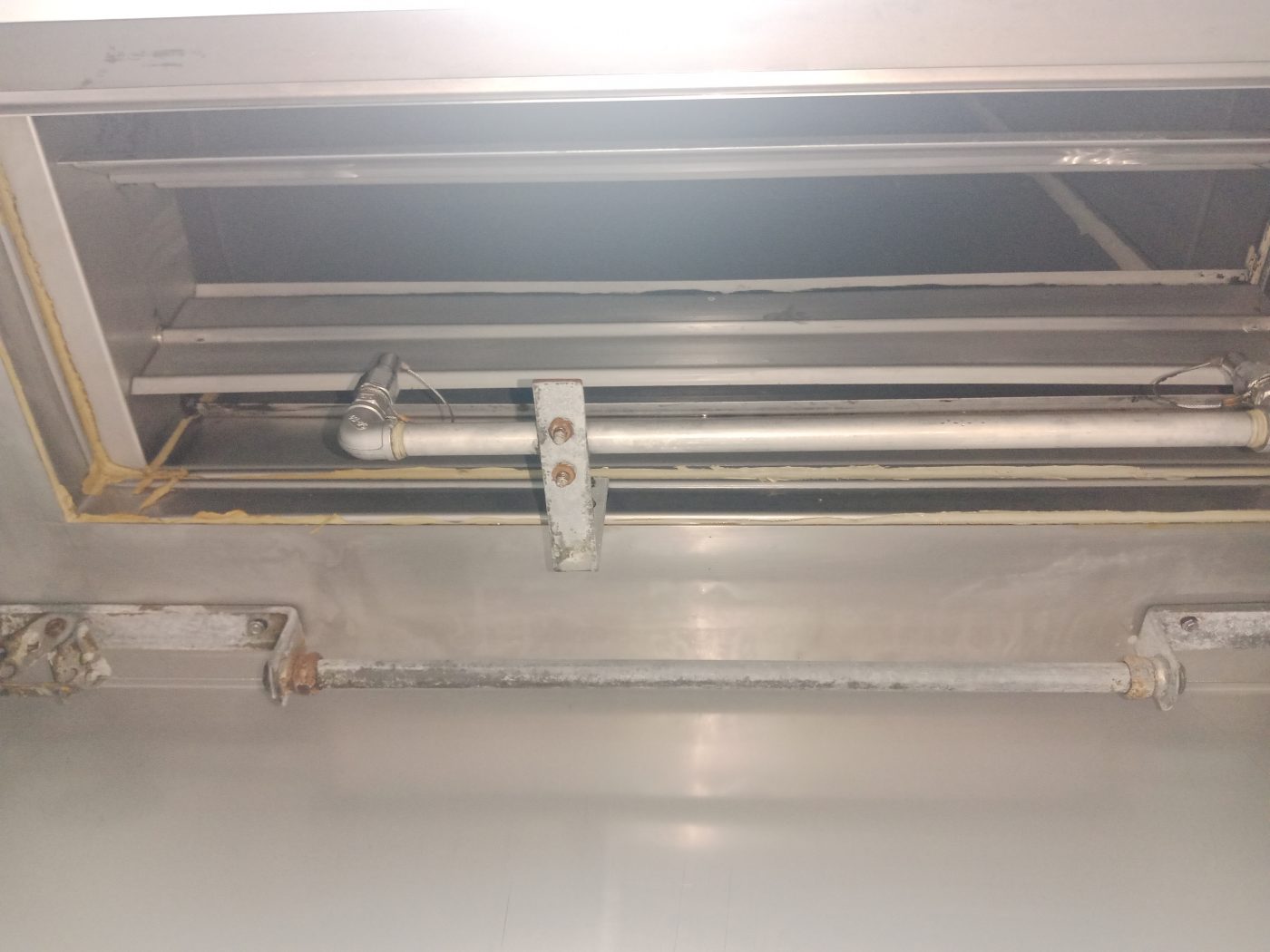
Electric motor failure in kitchen exhaust fans is most commonly caused by grease contamination, overheating from blocked filters, voltage imbalance, and bearing wear. Early warning signs include unusual noise, reduced airflow, and tripped breakers. Prompt diagnosis and motor replacement or rewinding restores full exhaust performance and keeps the kitchen compliant and safe.
We see motors fail for a handful of recurring reasons. Understanding them helps you spot trouble early and helps us give you an honest diagnosis when we arrive on site.
This is the number one culprit in commercial kitchens. Grease-laden air passes through the exhaust system constantly. When canopy filters aren't cleaned on schedule, grease migrates deeper into the ductwork and eventually reaches the fan housing and motor. Grease deposits on motor windings trap heat and degrade the insulation. Once the insulation breaks down, winding resistance drops, current surges, and the motor burns out. We've opened fan housings where the motor was effectively encased in a thick layer of hardened grease — at that point, no amount of cleaning saves the winding.
Motors are designed to operate within a specific temperature range. In a kitchen exhaust system, the airflow through the fan also helps cool the motor. When filters are blocked, ducts are caked with grease, or a damper is partially closed, airflow drops. The motor works harder against the increased static pressure, draws more current, and runs hotter than it should. Over time, thermal stress breaks down the winding insulation. We always check filter condition and duct resistance when a motor overheats — fixing the motor without fixing the airflow restriction means the replacement will fail too.
Three-phase motors — which most MV fans in commercial kitchens use — are sensitive to voltage imbalance across phases. Even a small imbalance causes one winding to carry disproportionately more current, generating localised heat. Add an ageing control panel, loose terminals, or a failing variable speed drive (VSD), and the electrical stress on the motor multiplies. We check incoming supply voltage, panel terminal tightness, and VSD output waveform as standard when we attend a motor failure call.
Bearings wear out. In a kitchen environment, heat and grease vapour accelerate that wear. When a bearing starts to go, you'll hear it — a low rumble, then a grinding noise, then in the worst case the shaft seizes. A seized shaft stalls the motor, and a stalled motor draws locked-rotor current, which will burn the windings almost instantly if the overload protection doesn't trip in time. Bearing replacement is one of the simplest, cheapest jobs we do — but only if it's caught early. Ignore the noise and you're looking at a full motor replacement.
Singapore's humidity is relentless. If a kitchen exhaust system is shut down for extended periods — during a renovation, say, or after a closure — condensation can form inside the fan housing. Moisture in the motor windings causes insulation breakdown and corrosion of the rotor. We always recommend a brief run-up test after any period of extended downtime before returning a system to full service.
You don't need to be a motor engineer to spot the early signals. We always brief kitchen managers on what to listen and look for between our scheduled maintenance visits.
When a client calls us with a suspected motor fault, we attend with our own diagnostic equipment. We carry insulation resistance testers, clamp meters, thermal imaging cameras, and vibration analysers as part of our standard kit. Our process is systematic:
Within that inspection, we can usually tell you clearly: is this motor rewindable, does it need a full replacement, or is the fault actually upstream in the electrical supply or control panel? We won't recommend a new motor if a bearing swap and a control panel check will resolve it.
It depends on the extent of winding damage. A motor with early-stage insulation degradation but intact windings can sometimes be dried out and retested. A motor with burnt windings can be rewound by a specialist — this is cost-effective for larger, higher-voltage motors where a replacement would be expensive. For smaller standard motors, direct replacement is often faster and more economical.
We stock a range of electric motors and MV fan components in-house, so for common sizes and configurations we can often turn a repair around without lengthy lead times. For non-standard or larger units, we'll advise you honestly on the rewind versus replace calculation before you commit.
The most effective thing any commercial kitchen operator can do is commit to a proper exhaust cleaning and maintenance schedule. Grease contamination and airflow restriction — the two leading causes of motor failure — are both entirely manageable with regular canopy and duct cleaning. We also recommend periodic motor health checks as part of a planned preventive maintenance (PPM) programme: insulation resistance testing once a year, bearing lubrication or inspection at agreed intervals, and a VSD parameter review wherever drives are installed.
When we set up a PPM programme for a client, we build it around their actual cooking load and operating hours — a high-volume wok kitchen needs a very different schedule to a light-use institutional canteen. There's no one-size-fits-all here.
In our experience, a properly maintained motor in a commercial kitchen exhaust system can last eight to fifteen years or more. Motors in high-grease, high-temperature environments with infrequent cleaning maintenance tend to fail much sooner — sometimes within two to three years. The single biggest factor is how consistently the canopy filters and ducts are cleaned. Keep the grease out of the airstream and the motor has a fighting chance.
We'd strongly advise against it. Without exhaust ventilation, grease and heat accumulate rapidly. Beyond the obvious discomfort for kitchen staff, you're creating a fire risk and likely breaching your NEA ventilation requirements. If a motor fails during service, the safest approach is to suspend cooking, switch off heat sources, and call us. We run 24/7 standby for exactly this kind of situation.
There's no blanket requirement to notify regulators every time you carry out a repair, but if your kitchen ventilation system is required under your NEA food shop licence conditions or your SCDF fire safety provisions, operating without it functional could put you in breach. We always advise clients to keep downtime as short as possible and to document the repair. We can always confirm the exact requirement with the relevant authority for your specific premises before you proceed.
A rewind means a specialist strips the old windings from the motor frame and re-lays fresh copper windings, re-insulates them, and tests the motor to original specification. It's viable when the motor frame and rotor are in good condition but the windings have burnt. A replacement means fitting an entirely new motor — faster, and often the right call for smaller or standard-frame motors where a rewind isn't economically justified. We'll give you an honest assessment of which route makes sense for your specific unit.
Yes, it can. VSDs allow precise speed control and soft starting, which actually reduces mechanical stress on the motor and extends bearing life. However, a poorly configured or ageing VSD can introduce harmonic distortion into the power supply, which increases winding stress and heat. We always include VSD condition in our motor fault diagnosis. If the drive is the root cause, replacing the motor without addressing the drive will just repeat the failure.
If your exhaust fan is making unusual noises, tripping breakers, or has stopped altogether, get in touch with us for a proper diagnosis. We carry our own stock of motors and MV fan parts, and our team is on standby around the clock — so when your kitchen needs to get back up and running, we can move fast. Contact us for a quotation and we'll come to site, assess the fault, and give you a straight answer on what it takes to fix it.
]]>Related reading: noise and vibration complaints from kitchen exhaust
We design, clean, repair and maintain commercial kitchen exhaust systems across Singapore — on 24/7 standby.